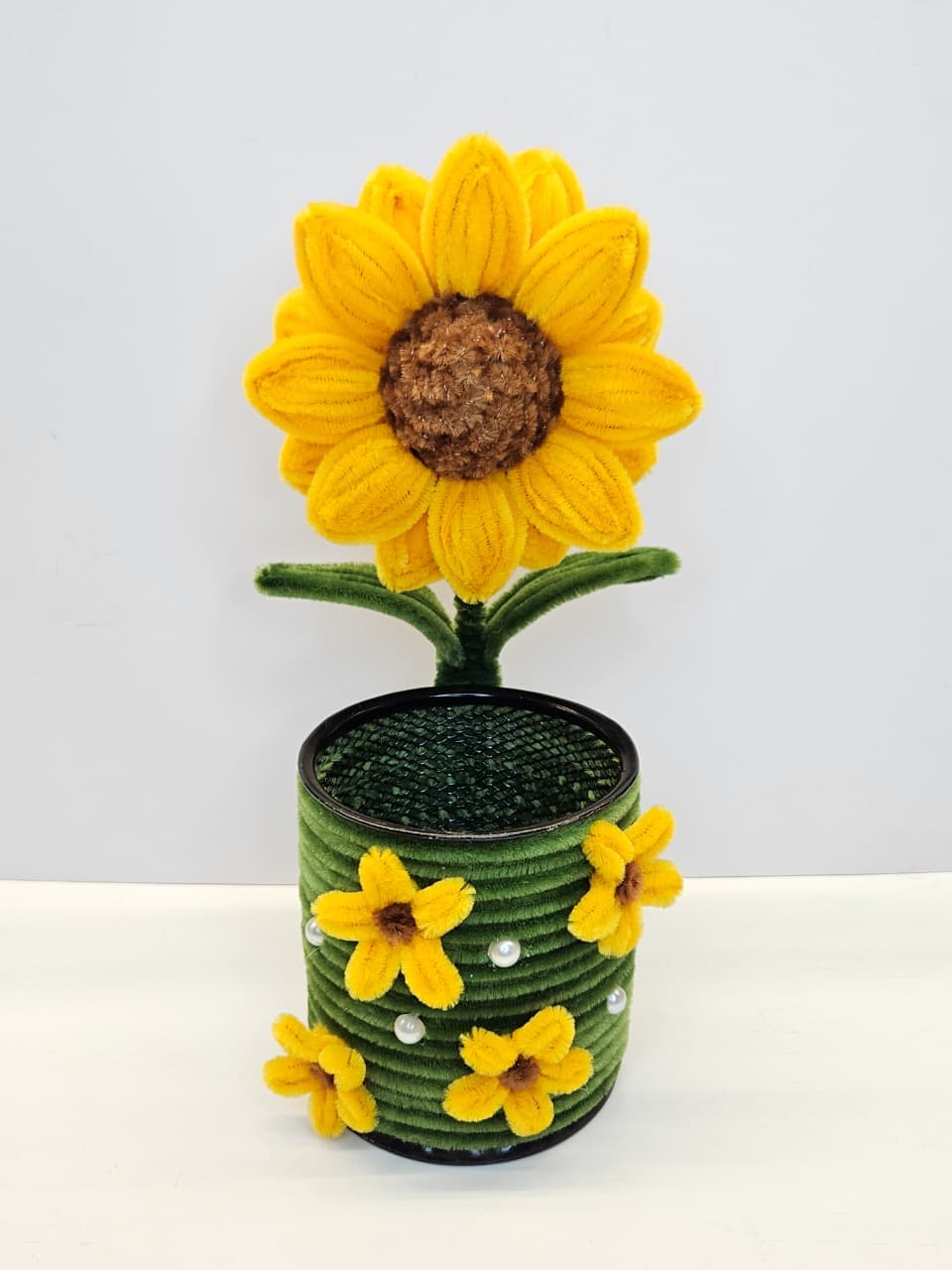

In the studio
How one bloom becomes a bouquet
Every flower we sell starts as a straight length of wire and fibre. Here is what happens between that and a wrapped bouquet — and why no two come out identical.
·3 min read
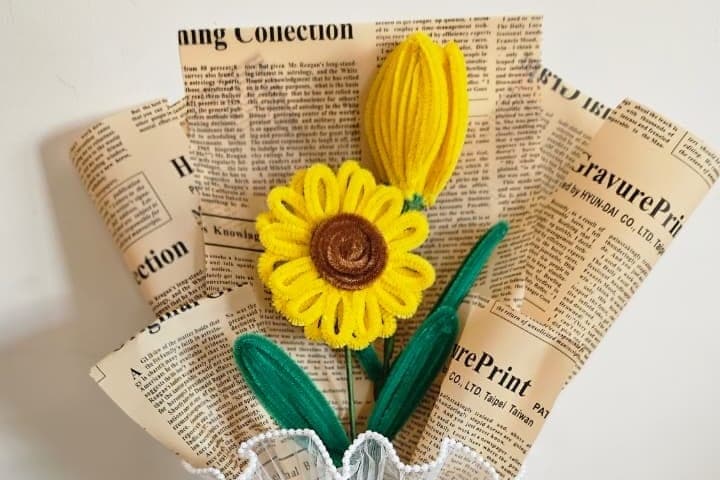
People ask what a pipe-cleaner flower is made of, and the honest answer is: a pipe cleaner. There is no former, no mould and no glue holding the shape of a petal. The wire holds it, and the hands put it there.
That is worth explaining properly, because it is also the reason two of the same piece are never quite the same.
The petals
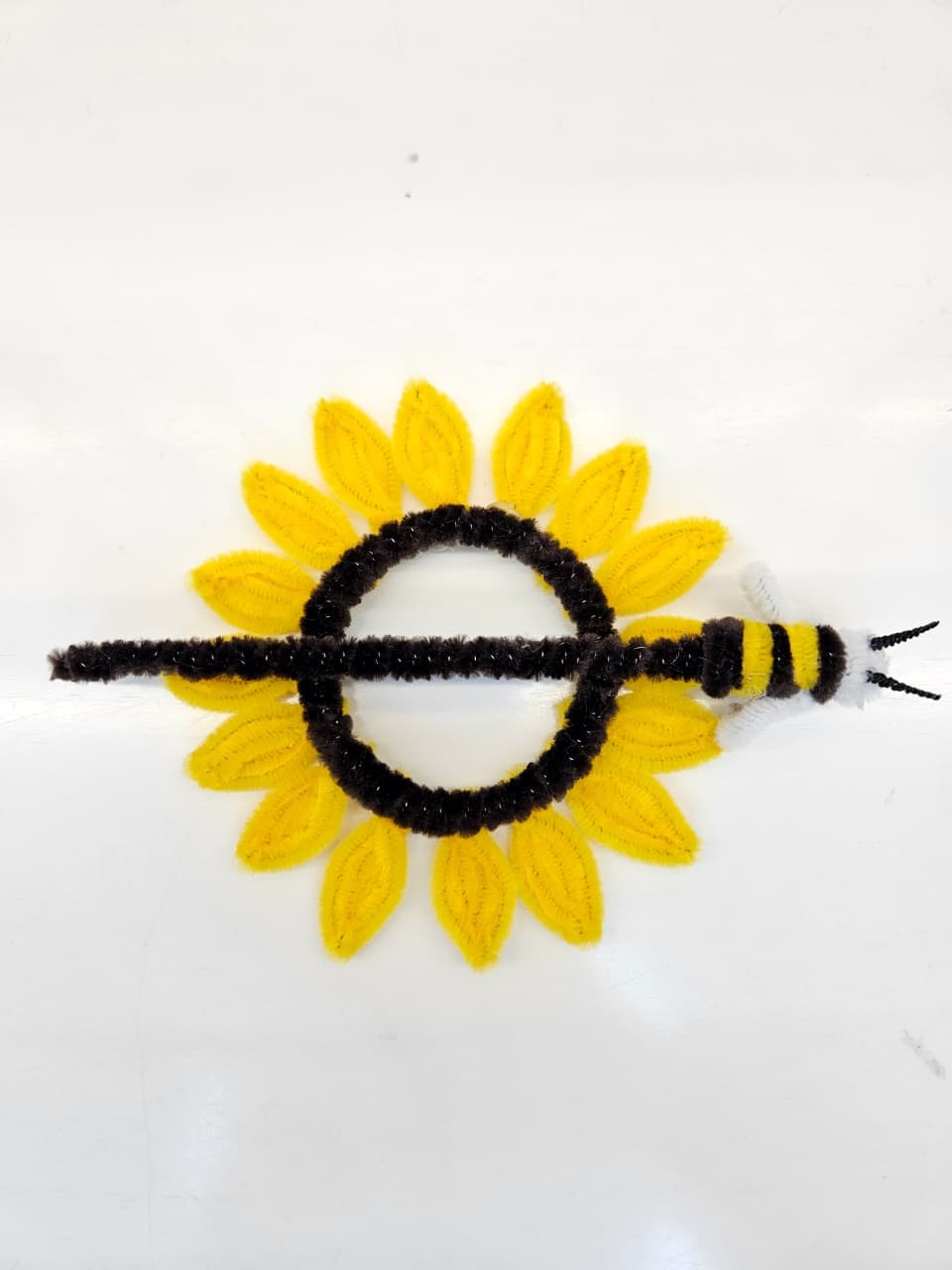
A petal starts as a loop. The wire is bent back on itself around a finger or a narrow dowel, and the loop is closed by twisting the base — one full turn, not half, or it opens again the first time someone touches it.
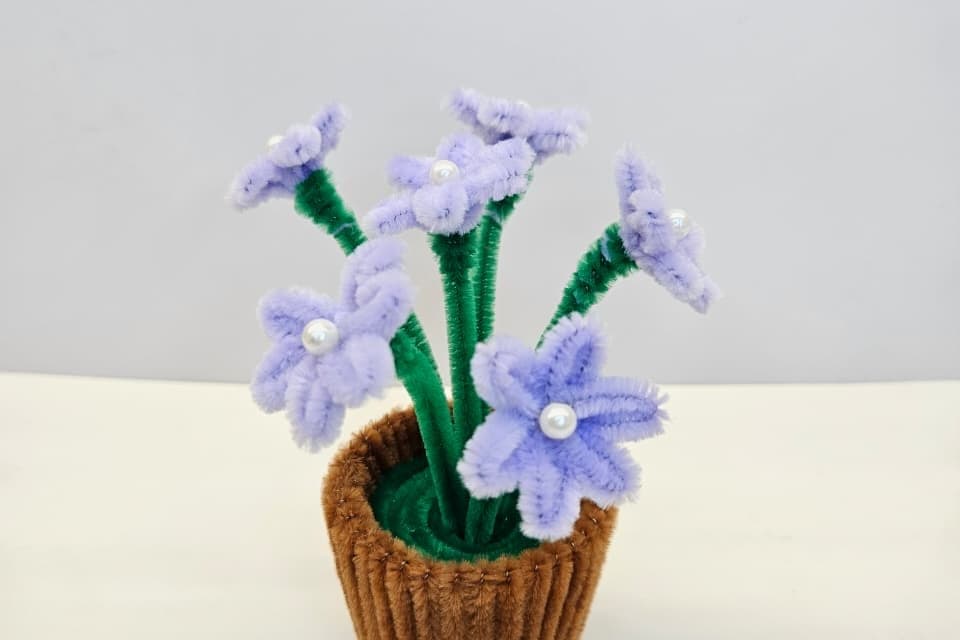
Five or six of those loops, twisted onto the same base, is a flower. The difference between a daisy and a lily is almost entirely how long each loop is and how tightly it is pinched at the tip. Sunflower petals are pinched; lily petals are drawn out and curved back afterwards with a thumbnail.
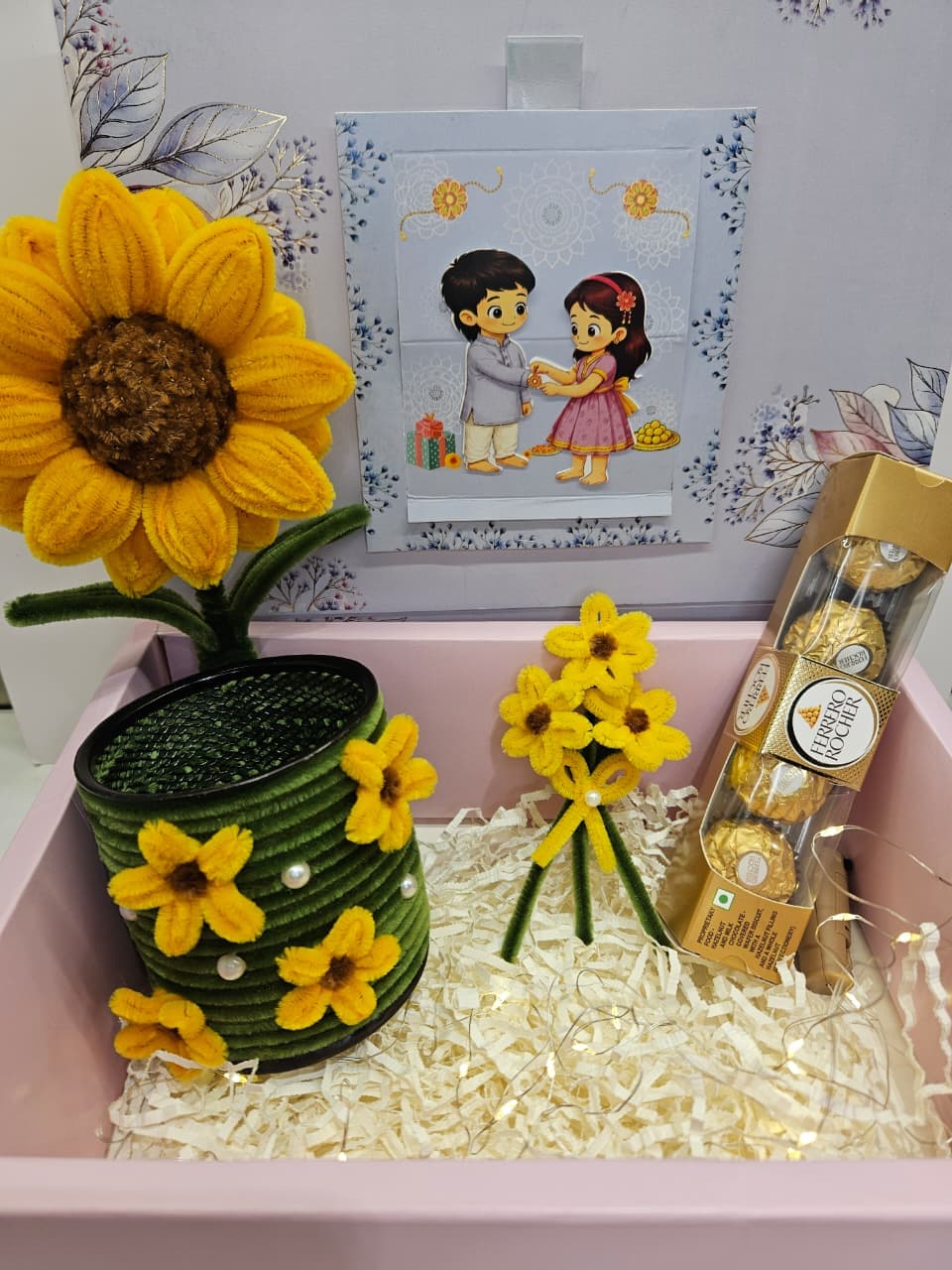
The centre goes in last. It is a separate length of fibre coiled flat, like a tiny rug, and pushed into the middle of the petals from behind — which is why our sunflowers have that dense brown spiral rather than a bead.
The stem
The stem is a second pipe cleaner, green, twisted into the base of the flower and then wrapped along its length so the join disappears. On taller pieces there is a third length wound around the first for rigidity, because a 20 cm stem with a single wire in it will lean once a bloom is sitting on top of it.
Leaves are added the same way — a loop, pinched into a point, twisted onto the stem where you want it.
This is the step that makes the piece bendable, and it is deliberate. A stem you can angle is a stem that survives a parcel; see keeping the flowers looking new for what to do when one arrives crooked.
From the shop
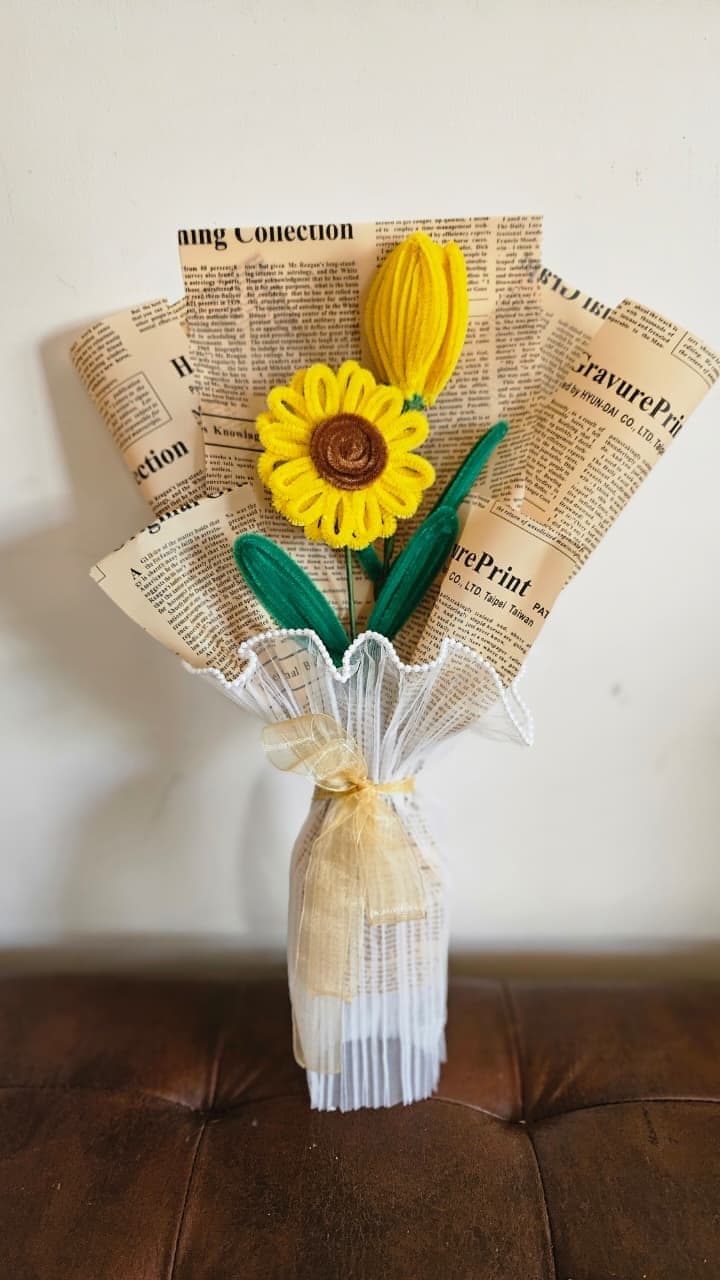
Sunflower & Tulip Newsprint Bouquet
₹399₹599
The arrangement
A bouquet is not just several stems held together. The blooms are set at different heights, the taller ones towards the back, and the stems are bound at one point so the whole thing fans rather than splays. Then it is wrapped — newsprint, organza or a paper sleeve, depending on the piece — and tied.
The wrap is doing a job beyond looking pretty: it holds the binding point and takes the pressure of being picked up, so the arrangement is not being rearranged by every hand that lifts it.
Why no two are identical
Every step above is a hand judging a length by eye. Loop by loop the differences are under a millimetre, and by the time thirty of them are assembled into a bouquet, one is a little fuller than the next and the sunflower's spiral has a different number of turns.
We could make them uniform by making them mechanically. Then they would be a manufactured flower, and you would buy one from someone with a factory instead.
Each piece is made after it is ordered, by hand, by us — which takes a few days, and is the whole reason the thing on your shelf looks made rather than bought.
From the shop
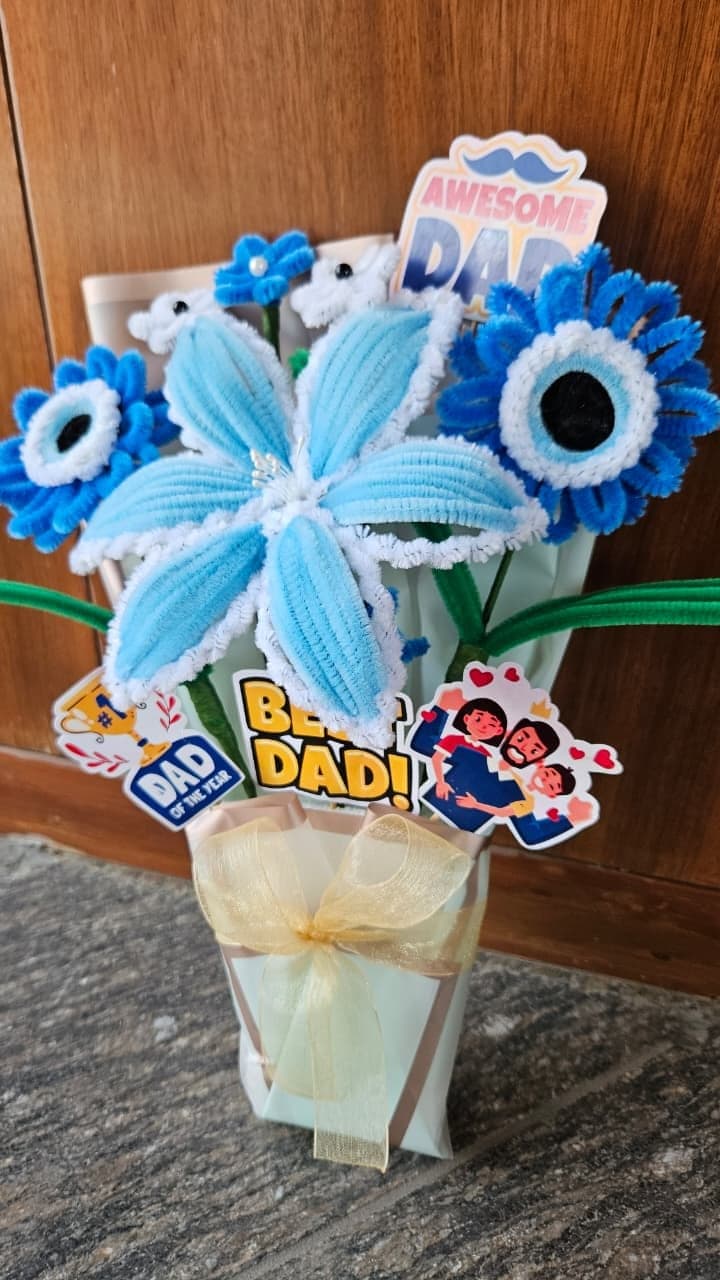
Best Dad Bouquet
₹999₹1,499